DESIGNS
There are lots of VTOL disc designs & designers,
Here are just some I selected.


Henri Coanda
(6-7-1886 to 11-25-1972)


Henri Coanda, an aeronautical engineer from Rumania, was living in Paris at the turn of the century.
By 1910, Coanda had built what might be considered the first jet aircraft in the world- the bi-plane "Turbine Aeroplane" which was displayed in Paris. Coanda, however, missed his critical historical claim to fame while toying with the aircraft's primitive motor-driven thermal jet turbine which started the aircraft rolling forward. Not being a pilot, Coanda jumped into the jet aircraft anyway and attempted to fly it. He failed and crashed, being ejected from the aircraft in the process. Another Turbine Aeroplane was not attempted. However, Coanda noticed that the flames from the engine exhausts went around the protective plates and converged again on the fuselage. This led to Coanda's famous physical phenomenon discovery that when a liquid moves at high speed near a curved surface, it adapts itself to that curvature. This also applies to air, but the flow speed must be much higher for effectiveness. It is a "suction" effect.
Thus, the "Coanda Effect" was discovered and Coanda himself quickly experimented with it before filing for three new propulsion patents in 1938.
Patent No.2,108,652 dated Feb 15, 1938 concerned airflow acceleration over the periphery of a concave disc.
Despite this remarkable idea, no official interest came of it until the German occupation of Paris in 1940. The SS immediately brought Coanda in and put him to work on designing a large disc to be powered by the latest in German jet engine technology.
Coanda for his part designed a strange lenticular disc with a diameter of 20 meters. It was to utilize twelve Jumo 004 jet engines installed in a radial pattern on its periphery with jet nozzles that forked into three pipes directed towards the thick external ring. Once lift was obtained,accelerating the engines on one side would cause the other side to go downwards and the craft went in that direction.
While Coanda's design was a masterpiece of jet disc technology, only scale model wind tunnel testing was performed by the end of the war. Such a machine would not be practical due to the number of jet engines required- vital engines that the Me-262 Schwalbe and Ar-234 Blitz desperately needed. The large machine would have also consumed large amounts of aviation fuel of which Germany had a critical shortage of.
Postwar, however, Coanda's work was validated by scientists of the Allied research services which declared his propulsion system suitable in 1949. The Cornell Aeronautical Laboratory in the US during 1952 further added to Coanda's credibility when tests performed using his propulsion system came back with positive results.
Coanda subsequently filed new patents in the 1960s for disc aircraft and propulsion systems but none of his craft were ever constructed.

(Text source: Rob Arndt)


His 1910 Tubine Aeroplane


His Lenticular Disc design


His postwar patents


C. P. Lent
Saucer-Shaped Aircraft (1957)


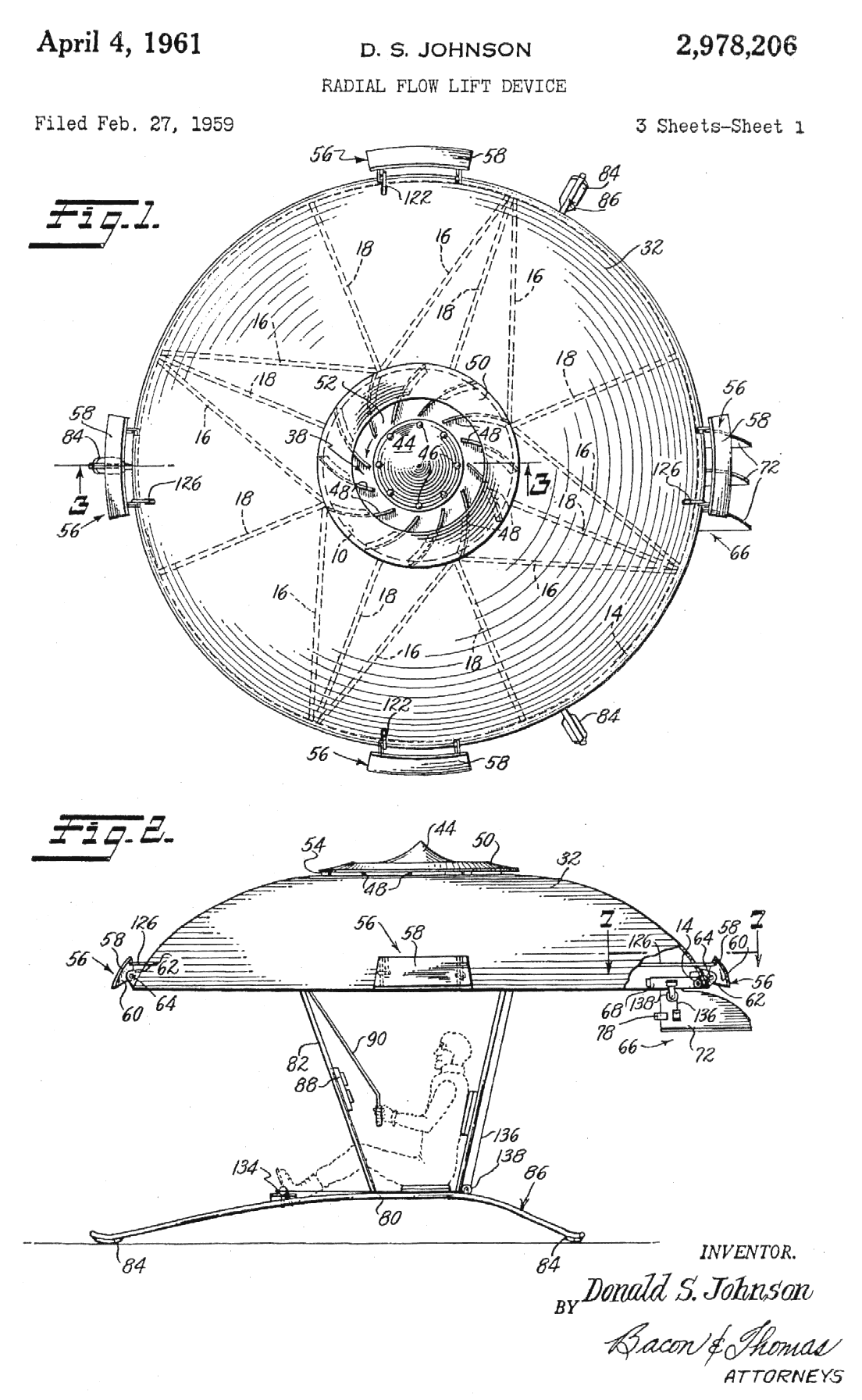
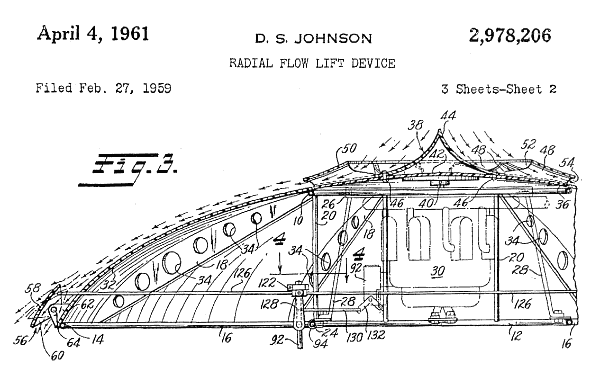
Donald S. Johnson
Radial Flow Lift Device, US patent 2,978,206 (1961)


kind of realized in the first Astro Kenetics test sauser (1963)

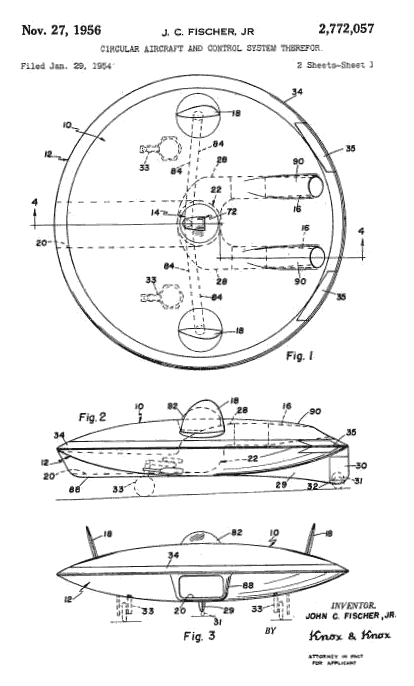
John C. Fischer JR
Circular aircraft and control system therefor. Patent 2,772,057 (1959)


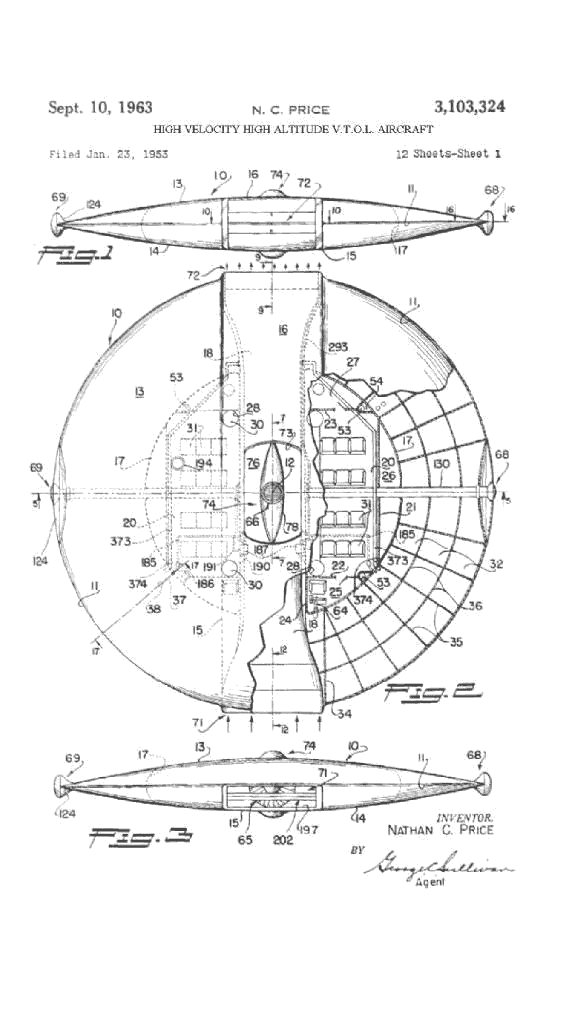
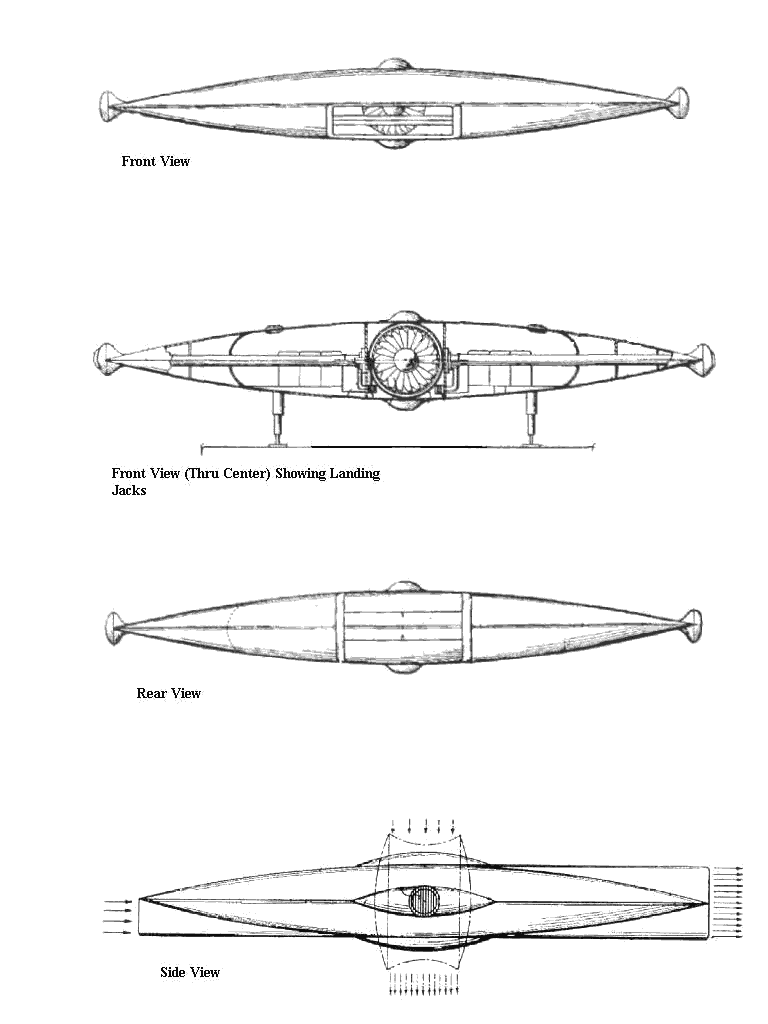
Lockheed Aircraft, Nathan C. Price
High velocity high altitude VTOL aircraft (1963)


Alexander G. Weygers (1901 - 1989)
The Discopter (1945)


"About the same time that he lived in Berkley Alex invented an unusual flying craft. That invention was what he called the "discopter", a vertical liftoff aircraft that looked very much like what was to be later termed "flying saucer". He made numerous detailed drawings of the aircraft and other drawings of an American city with many "discopter" ports that looked very futuristic. He sent these detailed plans to all the branches of the U.S.. Military and was eventually told that they were intrigued by the concept and the design of the craft but were not prepared at that time because the war effort superseded its development. However he did indeed patent the design for the "discopter" in 1943 with the U.S. Patent Office and it served as the prototype for other similar aircraft that have been developed up to the present day."

Links:
Alexander Weygers website: Alex Weygers Renaissance Man
Three prints of his Discopter drawings are for sale: www.discopter.net


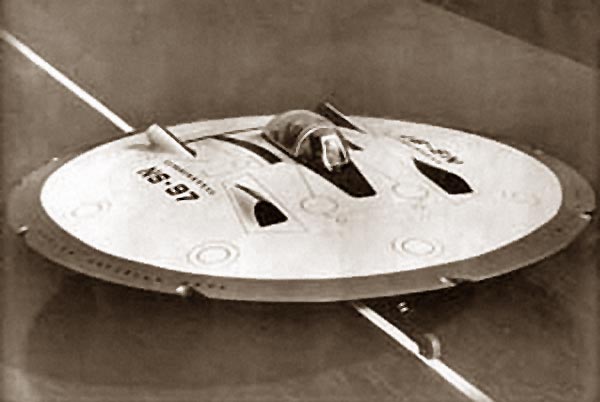
NORTHROP NS-97


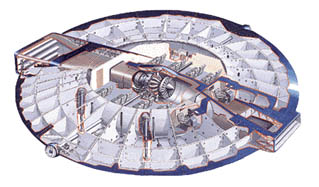
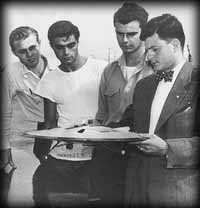
Dick Stasinos designed this saucer, in 1950. He was an engineering graduate of the Northrop Aeronautical Institute. Stasinos’s disc had a revolving outer shell and held eight turbo-jet ports. The center of the disc stayed stationary, along with the cockpit for the pilot. Two main jets provided the push and the eight jets provided the spin.

The disc is NOT in storage at the Ripley’s "Believe It or Not" museum in New York City. The source wrote so, but Edward Meyer (VP Exhibits & Archives Ripley Entertainment Inc) wrote me he can't find anything in their archives to suggest that Ripley was ever connected to this flying saucer/inventor. The original Stasinos photos would be archived at the Project SIGN Research Center (is that true?).
Source (dead link): Destination: Space UFO Template


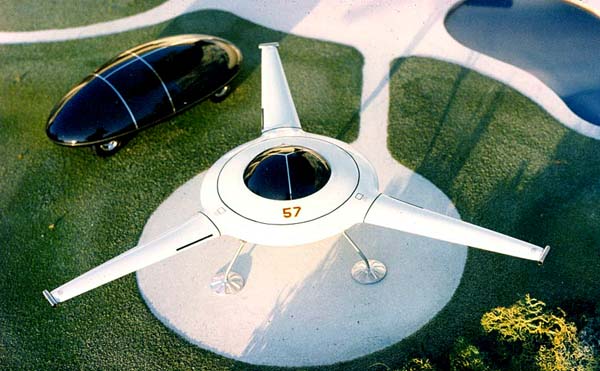
THE VENUS PROJECT

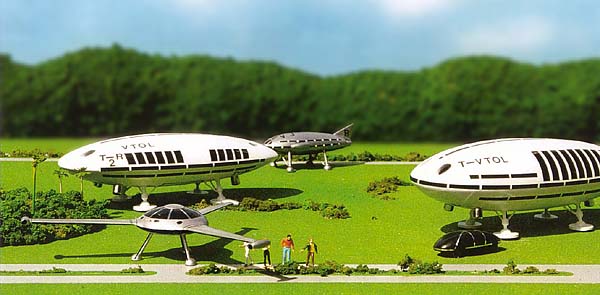
The redesign of a culture. MISSION STATEMENT: To enhance the lives of all people through the human use of science and technology.


Source: The Venus Project


LaesieWorks
Homepage


IFO - Home
IFO - Lib
IFO - Theory
IFO - GN Designs
IFO - Links
IFO - Shirts


Contact